

Digital Home Thoughts - News & Reviews for the Digital Home

Be sure to register in our forums and post your comments - we want to hear from you!


Zune Thoughts

Loading feed...

Apple Thoughts

Loading feed...

Laptop Thoughts

Loading feed...


All posts tagged "lumix"


Thursday, April 5, 2012

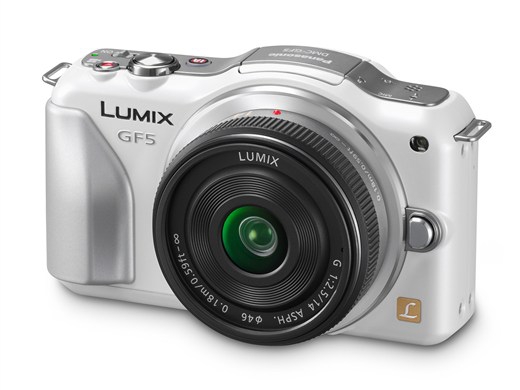
Panasonic Announces Lumix DMC-GF5 Mirrorless Camera

Posted by Lee Yuan Sheng in "Digital Home Hardware & Accessories" @ 03:00 PM

http://www.dpreview.com/news/2012/0...aunches-DMC-GF5

I hope you all were not expecting anything big from this announcement; the GF5 is a small refinement over the GF3. The sensor is an improved version of the 12 megapixel one in the G3, while the other main upgrade is a new VGA touch screen. There is no word on what type it is, so hopefully Panasonic has decided to use a capacitive touchscreen instead of its current use resistive touchscreens (yuck). There is also a new processing engine, so hopefully the JPGs will be better as well. The rest of the camera remains pretty much the same, including the 1080 video capability. DPReview has a hands-on, so hit the read link for more. The camera will retail for US$750 for the kit that comes with the 14-42 power zoom, or US$600 for the kit with the much bigger 14-42 zoom (which also defeats the purpose of a small camera). Panasonic needs to find a way to cut down the price of that power zoom!


Tuesday, January 31, 2012

Panasonic Introduces Four Lumix Compact Cameras

Posted by Lee Yuan Sheng in "Digital Home Hardware & Accessories" @ 12:00 PM

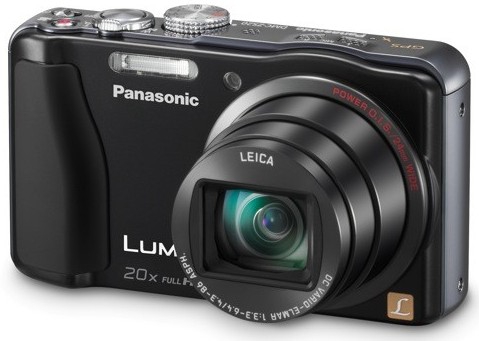
Panasonic today announced four Lumix cameras: Two travelzooms, and two rugged compacts. First up are the DMC-ZS20 (TZ30) and the DMC-ZS15 (TZ25). The ZS15 comes with a 14 megapixel sensor, a 16x optically stabilised 24-384mm equivalent f/3.3-5.9 lens, a 3" HVGA LCD, 1080i videos in 60 FPS in AVCHD. The ZS20 gets a 14 megapixel sensor, a 20x optically stabilised 24-480mm equivalent f/3.3-6.4 zoom lens, a 3" HVGA touchscreen LCD, 1080p videos at 60 FPS with a high speed 220FPS option at reduced resolution, and a GPS with a database of landmarks and maps that can be loaded from the included DVD. Both cameras bunch of special effects and in-camera software features (including a take on Sony's Sweep Panorama), burst mode of 10 frames a second, and full manual controls. The ZS20 will be priced at US$350, while the ZS15 will be priced at US$280. Both will ship in March. More photos and details at the link.

Panasonic Lumix DMC-ZS20 and DMC-ZS15

Next up are the rugged cameras, the DMC-TS4 (FT4) and the DMC-TS20 (FT20). The TS4 replaces the TS3, and now has a 12 megapixel sensor, an optically stabilised 4.6x 28-128mm equivalent f/3.3-5.9 zoom lens, a 2.7" QVGA LCD, 1080i video at 60 FPS, and a rugged shell that is waterproof to 40 feet (12m), shockproof to 6.6 feet (2m) and freezeproof to 14F (-10C). There is also a GPS sensor, and has the same landmarks and maps capability as the ZS20 above. The lower-end TS20 has a 16 megapixel sensor, a slow optically stabilised 4x 25-100mm equivalent f/3.9-5.7 zoom lens, a 2.7" QVGA LCD, 720p video at 30 FPS, and a less-rugged shell that is waterproof to 16 feet (4.8m), shockproof to 5 feet (1.5m) and freezeproof to 14F (-10C). The TS4 will ship in March for US$400, while the TS20 will ship in February for US$180 (quite the price difference there). Photos and details at the link.

Panasonic Lumix DMC-TS4 and DMC-TS20


Friday, January 13, 2012

CES/PMA 2012 Round-up: Compact Cameras

Posted by Lee Yuan Sheng in "Digital Home Hardware & Accessories" @ 12:00 PM

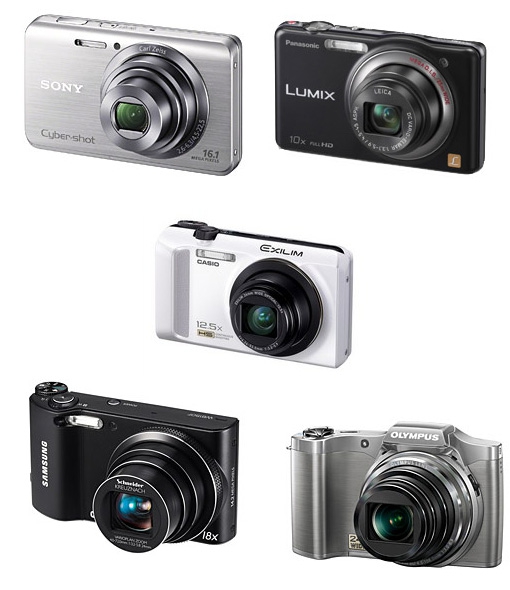
A large number of compacts have been announced over the past few days, so here is a brief round up of the various cameras announced:Panasonic - (News Article One, News Article Two, News Article Three)Pansonic, as usual, have announced their cameras, but with no pricing and availability. In an increasing commoditised market, I am not sure if it is a good idea. In any case, Panasonic has five cameras, with two belonging to a new line, the SZ superzoom compact. It does leave me a little confused: So it is smaller than a travel zoom, which in turn is smaller than a superzoom bridge camera, but still bigger than a not-so-super-but-still-generous-zoom compact (you know it is trouble when companies start finely dividing markets in this manner). The DMC-SZ1 and DMC-SZ7 both come with 10x 27-270mm equivalent f/3.1-5.9 stabilised lenses, with the former packing a 16 megapixel sensor, a 3" QVGA LCD, and 720p videos at 30FPS. The latter has a 14 megapixel sensor (strange considering consumer cameras tend to have more pixels further up the range), but boasts a 3" HVGA LCD, and 1080p video at 30FPS in AVCHD.Next up are a couple of budget compacts in the FH line, the DMC-FH6 and DMC-FH8. Both possess a 5x optically stabilised 24-120mm equivalent f/2.5-6.4 zoom lens and 720p video mode. The former has a 14 megapixel sensor with a 2.7" QVGA LCD, and the latter has 16 megapixel sensor with 3" QVGA LCD. With differences so minor, I wonder why they bother.Last for Panasonic, is the DMC-S2, which is an update of the S1 budget camera. The specs are now almost that of the S3, so I suppose given the right pricing, the S2 is the one to go for if you are truly looking at the cheapest of the cheap. The camera has a 14 megapixel sensor, a 4x optically stabilised 28-112mm equivalent f/3.1-6.5 zoom lens, a 2.7" QVGA screen, 720p video mode, and a curvy plastic body instead of the metal ones in the FH line.More cameras after the break! Read more...

Monday, November 7, 2011

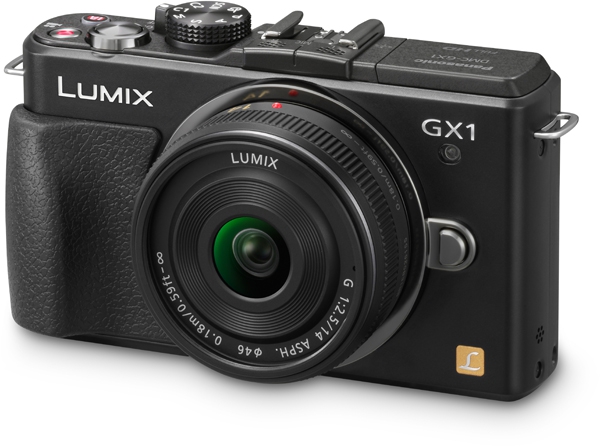
Panasonic Announces the Lumix DMC-GX1 Micro Four Thirds Camera

Posted by Lee Yuan Sheng in "Digital Home Hardware & Accessories" @ 11:36 AM

Panasonic today announced their latest camera, and for those of you who wanted a proper follow-up to the GF1, here it is! The main upgrades here are in the form of a 16 megapixel sensor with a top ISO rating of 12,800 borrowed from the G3, an enlarged and rubberised grip, improved AF that promises 0.09 seconds focusing time, an electronic level for those of us who cannot place horizons straight, 1080i videos at 60 FPS in MP4 or AVCHD compression, and a new accessory connector that allows a much higher resolution EVF to be attached, at 1.44 million subpixels (probably SVGA resolution). The 3" HVGA LCD is now a touchscreen as well, which in addition to allowing touch-to-focus, also sports two of the four custom function "buttons". For those that need handholding Panasonic promises the Intelligent Auto (iA) function will handle even more parameters automatically. One thing I noticed is the loss of the drive mode lever; its functionality is now replaced by a button on the rear of the camera. Shame.

Personally, the GX1 is an incremental upgrade from the GF1. I was sort of hoping for something more different from Panasonic. Maybe the GX2 next year? I would love to see something with the EVF built-in. After all, Sony has shown that it can be done, with the NEX-7.

The GX1 will cost US$700 for the camera alone, US$800 with the old 14-42/3.5-5.6 kit, or US$950 with the new pancake 14-42/3.5-5.6 lens. Expected availability will be in December. PR and an image of the camera's rear after the break.

DPReview.com Preview

DCResource.com Preview

Read more...


Friday, August 26, 2011

Panasonic Announces Two X-series Lenses for Micro Four Thirds; Makes Sony NEX Lenses Fat in Comparison

Posted by Lee Yuan Sheng in "Digital Home Hardware & Accessories" @ 10:59 AM

http://www.engadget.com/2011/08/26/...unches-x-serie/

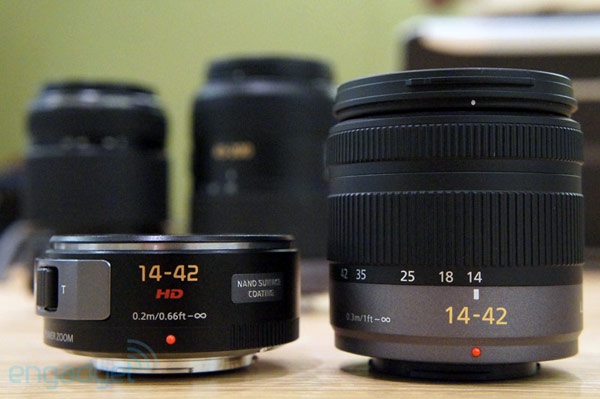
"Anyone who's used Panasonic's 14-42mm Micro Four Thirds zoom lens has probably noticed its relatively bulky design, especially when compared to Olympus's counterpart. Today, the company announced a new lens that offers the same zoom and f/3.5-5.6 aperture range in a housing less than half the size when closed, and still noticeably smaller when extended."

I think the above photo says it all. The new 14-42 X-series lens is something Sony should have done with their NEX cameras to avoid the silly "small camera, huge lens(es)" problem. Both lenses have the exact same specification, that being zoom lenses with 14-42mm focal lengths, and maximum apertures of f/3.5-5.6. The differences come in the handling: The X-series 14-42 has no focus ring, and zooming is motorised, handled by a lever on the left side of the lens. The other difference is the price: The cost of the new lens is US$400, twice that of the larger lens's US$200. The lens will be available in October, and can be purchased as part of a new GF3 kit, called the GF3X, for US$800.

The other lens is a smaller telephoto zoom, the 45-170mm f/4-5.6. Like the 14-42, there is a lever to control the zoom, but there is also a power zoom ring (think Minolta's ill-fated experiments in the early 1990's), as well as a focusing ring. The 45-170mm will cost US$450 and will ship in September. Personally I prefer the older 45-200 at US$350. It might be a bit bigger, but once you reach beyond a certain size, any space savings seems a bit futile. Photos of the 45-170mm and the 14-42mm at the source.


Panasonic Announces DMC-FZ150 and DMC-FX90 Digital Cameras

Posted by Lee Yuan Sheng in "Digital Home Hardware & Accessories" @ 10:58 AM

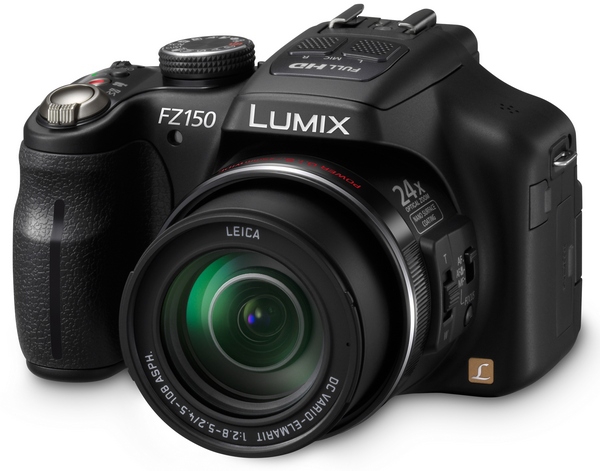
The two new cameras from Panasonic's announcement look like the top-of-the-line for their respective lines; The DMC-FZ150 is a 24x superzoom camera with a stabilised 25-600mm equivalent f/2.8-5.2 zoom lens, a new 12 megapixel CMOS sensor, a HVGA 3" articulated LCD, 1080p videos at 60 FPS in AVCHD, with sound recorded through its stereo microphones, and a host of manual controls. There is a tiny jack that looks like it might take a microphone, but if it is anything like the GH1 I have, expect the automatic gain control to play havoc with your sound levels anyway. Available in late September for US$500.

Next up is the DMC-FX90, a ultra-compact with WiFi (of the 802.11n variety). It appears that the camera supports an adhoc connection with a smartphone, and photos can be shared using the Panasonic supplied iOS or Android app. Sorry Windows Phone users, you are out of luck here. There is also the usual direct sharing feature, using the sole button on the back of the camera to initiate the process. The rest of the camera is pretty basic for a 2011 compact: a stabilised 5x 24-120mm f/2.5-5.9 zoom lens, a 12 megapixel CCD, 3" HVGA touchscreen (again, almost no hardware buttons on the back of this camera), and 1080i videos at 60 FPS in AVCHD. There is something about the slab design I like a lot though. Availablility and pricing unknown. Photo of the FX90 after the break.

DCResource.com Coverage of FZ150

DCResource.com Coverage of FX90

Read more...


Friday, July 29, 2011

Digital Photography Review's Travel Zoom Roundup

Posted by Lee Yuan Sheng in "Digital Home Hardware & Accessories" @ 10:30 AM

http://www.dpreview.com/reviews/q31...lzoomgrouptest/

"The so-called 'Travel Zoom' category was effectively invented by Panasonic, with the Lumix DMC-TZ1. Released in 2006, the TZ1 was the first camera with a 10x optical zoom lens that could truly be called 'compact', and although Panasonic had the field to itself for a while, it wasn't long before other manufacturers started to move into the same space. Fast forward to 2011, and almost all of the major camera manufacturers offer compact cameras with at least 10x optical zooms, up to almost 20x in some cases."

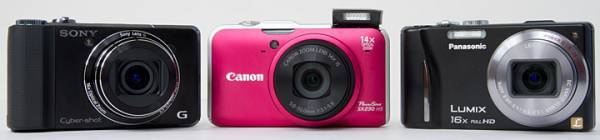
The travel zoom area is probably the last major growth area for compacts in light of compacts getting squeezed from smartphones at the low end and cheap DSLRs and cute mirrorless interchangeable lens cameras on the high end, so it would be nice to see some more innovation in this area, instead of so-so image quality tacked to a design that has not changed much from the TZ1's launch in 2006. Still, they are still popular enough, and DPReview takes a look at some of the latest round of travel zooms, and there's a surprise winner in the round-up. Hint: The brand starts with an "N". I always thought their compacts were on the lacklustre side, and in fact, the sample images are not very inspiring in some cases; the camera gets a win mostly in the way it handles and operates. Hit the link for the roundup!


Digital Photography Review's Travel Zoom Roundup

Posted by Lee Yuan Sheng in "Digital Home Hardware & Accessories" @ 10:30 AM

http://www.dpreview.com/reviews/q31...lzoomgrouptest/

"The so-called 'Travel Zoom' category was effectively invented by Panasonic, with the Lumix DMC-TZ1. Released in 2006, the TZ1 was the first camera with a 10x optical zoom lens that could truly be called 'compact', and although Panasonic had the field to itself for a while, it wasn't long before other manufacturers started to move into the same space. Fast forward to 2011, and almost all of the major camera manufacturers offer compact cameras with at least 10x optical zooms, up to almost 20x in some cases."

The travel zoom area is probably the last major growth area for compacts in light of compacts getting squeezed from smartphones at the low end and cheap DSLRs and cute mirrorless interchangeable lens cameras on the high end, so it would be nice to see some more innovation in this area, instead of so-so image quality tacked to a design that has not changed much from the TZ1's launch in 2006. Still, they are still popular enough, and DPReview takes a look at some of the latest round of travel zooms, and there's a surprise winner in the round-up. Hint: The brand starts with an "N". I always thought their compacts were on the lacklustre side, and in fact, the sample images are not very inspiring in some cases; the camera gets a win mostly in the way it handles and operates. Hit the link for the roundup!


Digital Photography Review's Travel Zoom Roundup

Posted by Lee Yuan Sheng in "Digital Home Hardware & Accessories" @ 10:30 AM

http://www.dpreview.com/reviews/q31...lzoomgrouptest/

"The so-called 'Travel Zoom' category was effectively invented by Panasonic, with the Lumix DMC-TZ1. Released in 2006, the TZ1 was the first camera with a 10x optical zoom lens that could truly be called 'compact', and although Panasonic had the field to itself for a while, it wasn't long before other manufacturers started to move into the same space. Fast forward to 2011, and almost all of the major camera manufacturers offer compact cameras with at least 10x optical zooms, up to almost 20x in some cases."

The travel zoom area is probably the last major growth area for compacts in light of compacts getting squeezed from smartphones at the low end and cheap DSLRs and cute mirrorless interchangeable lens cameras on the high end, so it would be nice to see some more innovation in this area, instead of so-so image quality tacked to a design that has not changed much from the TZ1's launch in 2006. Still, they are still popular enough, and DPReview takes a look at some of the latest round of travel zooms, and there's a surprise winner in the round-up. Hint: The brand starts with an "N". I always thought their compacts were on the lacklustre side, and in fact, the sample images are not very inspiring in some cases; the camera gets a win mostly in the way it handles and operates. Hit the link for the roundup!


Thursday, July 14, 2011

Panasonic Lumix G3 Reviewed by Digital Photography Review

Posted by Lee Yuan Sheng in "Digital Home Hardware & Accessories" @ 09:30 AM

http://www.dpreview.com/reviews/panasonicdmcg3/

"The G3 heralds the start of Panasonic's third generation of mirrorless cameras. In some respects it's a refinement of previous models; its electronic viewfinder and hinged rear display screen are identical to the G1 and G2, for example. However, behind the aluminium front panel of its slimmed-down, externally-simplified body lies a completely new 16.7MP sensor. This makes it the first mass-market Micro Four Thirds model to move beyond Panasonic's 12MP chip."

This is one of those good news and bad news cameras, if you ask me. The image quaility is good, but the decrease in external controls and reduced grip means a lot of Panasonic's own lenses are harder to use. Still the price is not too bad (it is cheaper than the G2) and the improved image quality means it can hold its own against entry-level DSLRs, while providing a user interface that is more accessible to casual users. I am now waiting to see what Panasonic does with the GH3. Will they dumb it down like the G and GF series, or will they bump it up a spec to compete with the 60Ds and D7000s?


Monday, June 13, 2011

Panasonic Discusses Future of Lumix GF and GH Micro Four Thirds Cameras.

Posted by Lee Yuan Sheng in "Digital Home Hardware & Accessories" @ 07:13 PM

http://www.techradar.com/news/photo...-to-come-964524

"Panasonic intends to release a Lumix GF camera aimed at advanced photographers, the company has confirmed to our colleagues at PhotoRadar. Speaking exclusively to PhotoRadar, Panasonic's Director of DSC Business unit Ichiro Kitao said that although he was unable to confirm a date for such a camera, Panasonic plans to split the GF series into two lines and release a GF camera aimed at experienced photographers."

After the rather disappointing (to me anyway) GF3, there is some good news that Panasonic does intend to follow up on the GF1 rather than just having the simpler cameras to carry the GF line. Also interesting news is that the GH3 is going to be important for the company. Being a GH1 user myself, I am interested to see what Panasonic can do to the GH line to make it more appealing to the enthusiast crowd.


Panasonic Announces Lumix DMC-GF3

Posted by Lee Yuan Sheng in "Digital Home Hardware & Accessories" @ 12:30 PM

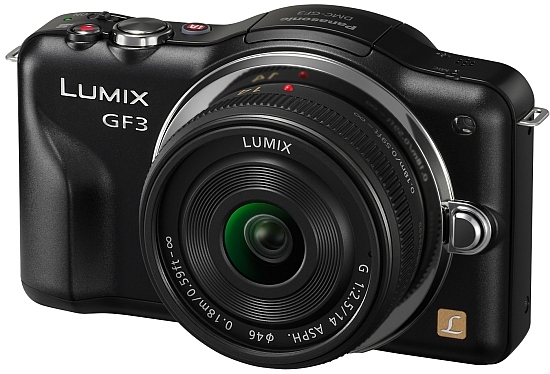
Panasonic has announced the Lumix DMC-GF3, which continues Panasonic's strategy of making the Micro Four Thirds cameras more accessible for compact camera users, with even more features being cut from the the already shrunken- down GF2. Gone is the hotshoe along with the rear thumb-operated command dial, accessory jack and stereo microphone. There is now a combination directional pad and dial, but those are generally inferior to a dedicated command dial. All-in-all, Panasonic is gunning for the crowd targeted by Sony's NEX line (the GF3 is smaller than the NEX-5), but it means for now, there is no real successor to the GF1; a compact interchangeable lens camera for photography enthusiasts. Personally I am not impressed; the GF-series is no longer something I would buy to use.

The rest of the camera remains the same as the GF2; same 12 megapixel sensor with the ability to churn out 1080p videos in AVCHD at 30 or 25 FPS (depending on your region) and a 3" touchscreen LCD. What is new is yet another battery (I can hear the groans at having to buy yet another expensive Panasonic battery), along with more built-in effects. The camera is available with the cheaper 14-42/3.5-5.6 OIS lens for US$599 in late August, and the 14/2.5 pancake lens for US$699 in July. Press release after the break.

More Coverage:

DPReview.com Preview

DCResource.com Preview

Read more...


Thursday, May 12, 2011

Panasonic Announces Lumix DMC-G3

Posted by Lee Yuan Sheng in "Digital Home Hardware & Accessories" @ 12:55 PM

http://www.dcresource.com/news/news...tem.php?id=4315

"Panasonic today announced the Lumix DMC-G3, a Micro Four Thirds interchangeable lens camera. As you might have guessed, this is the follow-up to the DMC-G2. The most significant changes here are a new sensor and an even smaller body."

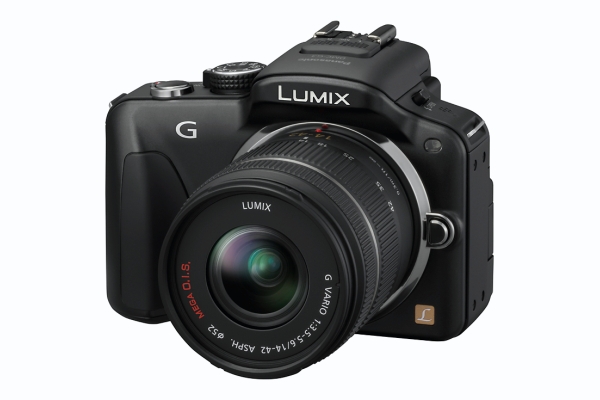
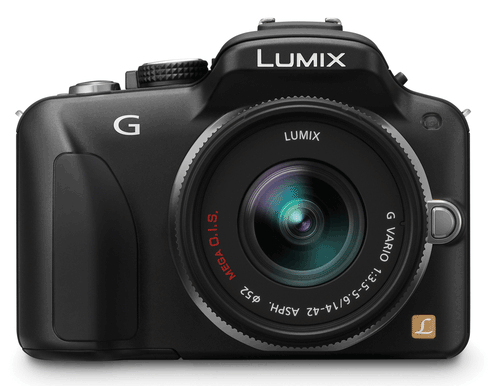
That was fast. The G2 was announced in March 2010, so it has been just 14 months between the two cameras. That is an incredibly short time for a new product, and I think Panasonic is likely to be re-aligning their Micro Four Thirds line. The G3's most noteworthy new features are an all-new 16 megapixel sensor, along with a more compact, aluminium front (the previous G cameras were entirely plastic with a rubberised coating). Other improvements include a fast AF system from the GH2, 1080p videos at 30 FPS in a 60i container, the touchscreen interface from GF2. Continuous shooting speed is increased to 4 FPS. Not everything is improved though; to make the body smaller and reduce cost, the G3 has less buttons, dials and knobs than the G2. Also missing is the infrared sensor which allows for automatic switching between the EVF and reard LCD display. Other minor things changing for the worse include the loss of microphone input, simpler strap lugs, and the smaller battery used by the GF2.

I suspect Panasonic is trying to aim the Lumix G lineup at a broader market, like how Sony captured so many users with their NEX line. Both the GF2 and G3 are smaller and simpler than their predecessors; I only hope that the GH series remains intact as the flagship of the line.

The G3 will be available in black, white, red and brown in June, with the 14-42/3.5-5.6 lens for about US$700. More coverage at the below links, and more photos of the camera with the press release after the break.

Preview (with samples) of Panasonic Lumix DMC-G3 by DPReview.com

Q&A session with Panasonic representatives

Read more...


Panasonic Announces Lumix DMC-FH7

Posted by Lee Yuan Sheng in "Digital Home Hardware & Accessories" @ 12:54 PM

http://www.dcresource.com/news/news...tem.php?id=4314

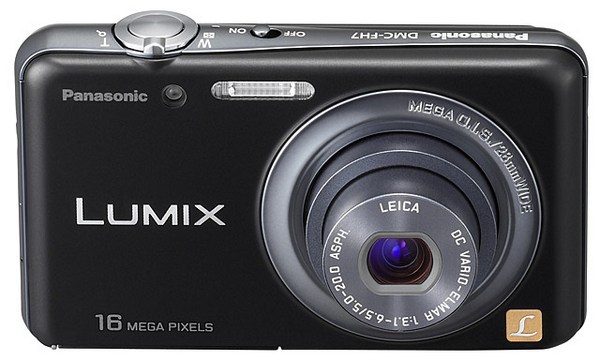
The other announcement from Panasonic today is a standard compact: The DMC-FH7. It features a 16 megapixel sensor, a f/3.1-6.5 28-112mm equivalent zoom lens, image stabilisation (Mega OIS), a 3" QVGA touchscreen LCD (and no buttons at the back at all), and the ability to record 720p videos at 24 FPS. No word on pricing or ship date, so it is hard to conclude if this is a good deal or not!


Wednesday, April 13, 2011

GPS Ultra Zoom Camera Roundup

Posted by Lee Yuan Sheng in "Digital Home Hardware & Accessories" @ 01:00 PM

http://www.dcresource.com/reviews/c...ra-zoom-cameras

"One of the most popular digital camera genres in recent years has been what some have called the "travel zoom". These compact cameras have typically featured lenses of around 10X - 14X, large LCDs, and HD movie modes. In 2011, camera manufacturers really put the "travel" in travel zoom, by adding GPS receivers to their cameras. So, not only do you now have a camera which can go anywhere, but you'll know exactly where you took the photo."

One advantage of dedicated cameras is the ability to offer a zoom lens, so huge zoom factors are still pretty much a selling point. Combine that with a compact size and the result is a camera that still sells pretty well in this age of smartphones. I was a bit surprised at the winner of this shoot out, but I won't spoil the surprise, other than saying that the initial debut of the line was very lacklustre to begin with. Well done C... I mean, camera company!


Tuesday, February 1, 2011

Panasonic Lumix GF2 Reviewed by Digital Camera Resource Page

Posted by Lee Yuan Sheng in "Digital Home Hardware & Accessories" @ 01:00 PM

http://www.dcresource.com/reviews/p.../dmc_gf2-review

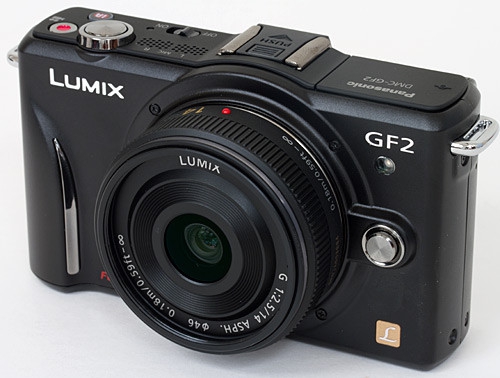
"The Panasonic Lumix DMC-GF2 (priced from $499) is a compact interchangeable lens camera that uses the Micro Four Thirds standard. It's the follow-up to the popular DMC-GF1 (a camera I own myself), offering a smaller body, touchscreen LCD, faster performance, Full HD movie recording, support for Panasonic's 3D lens, and more. That's on top of its 12 Megapixel Live MOS sensor, beautiful 3-inch LCD with a well-implemented live view feature, a do-everything Intelligent Auto mode, and plethora of optional extras."

Here's another review of the GF2, which is strictly-speaking not quite a follow-up to the GF2. Panasonic really should have given in a different model number. Perhaps this is just the stop-gap reaction to the smaller Sony NEX cameras while Panasonic designs something new that is even smaller than the GF2. Regardless, I still think in many ways, this is better than the NEX cameras because of the larger lens system that Olympus and Panasonic have built up. Unfortunately, it looks like that tiny 14mm f/2.5 isn't quite so hot...


Panasonic Announces Prices for a Slew of Cameras

Posted by Lee Yuan Sheng in "Digital Home Hardware & Accessories" @ 12:00 PM

Remember those cameras Panasonic announced at CES 2011? Well, they've got prices for them. The GF2 gets prices too. Here's a quick summary:

DMC-GF2 with 14-42mm lens - $599.95

DMC-GF2 with 14mm lens - $699.95

DMC-FP7 - $229.99

DMC-FP5 -$199.99

DMC-FH27 - $229.99

DMC-FH25 - $199.99.

DMC-FH5 - $149.99

DMC-FH2 - $139.99

DMC-S3 - $129.99

DMC-S1 - $119.99

Press release after the break.

Read more...


Wednesday, January 26, 2011

Panasonic Announces New Lumix Cameras; Way More Interesting Than CES 2011 Announcement

Posted by Lee Yuan Sheng in "Digital Home Hardware & Accessories" @ 12:30 PM

Panasonic has more cameras up it sleeves, and it makes me wonder why they bothered with CES 2011 in the first place: These are way more interesting. First up we have the ZS10 (TZ20 in Europe/Asia, and pictured above) and ZS8 (TZ18 in Europe/Asia). These continue the compact superzoom lineup Panasonic started with the TZ1. Both cameras have the same stabilised 16x 24-384mm equivalent f/3.8-5.8 zoom lens, but are quite different in other areas. The ZS8 uses a 14 megapixel CCD, capable of 720p videos in MJPEG mode, a 3" QVGA screen, and the same tagging feature for Facebook and YouTube that came with the CES 2011 cameras. The ZS10 has a 14 megapixel CMOS sensor with 1080p videos in AVCHD, GPS, a 3" touchscreen, and a 10 FPS high-speed mode.

The TS3 (aka FT3 in Europe/Asia) is a refresh in Panasonic's rugged line. It features a stabilised 4.6x 28-128mm equivalent f/3.3-5.9 zoom lens, 12 megapixel CCD, 2.7" QVGA LCD, 1080i video mode, waterproof and shockproof capability, and GPS with a compass, altimeter and a barometer. Truly for the more adventure-minded. I'm curious to know how well the barometer and altimeter works.

Finally there's the slim FX78, which replaces the FX75 (and maybe the FX700, both cameras are so similar). This is basically a premium compact, with a stabilised 5x 24-120mm f/2.5-5.9 zoom lens, 3.5" QVGA (time to step it up Panasonic) touchscreen, 1080i video mode, and claimed better AF compared to its predecessor. Oh, and there are some fancy retouching options to make one look better.

It is nice to know that with these more advanced models, Panasonic has not jumped onto the 16 megapixel bandwagon yet. Hopefully a consumer electronics giant like them can help stem the crazy megapixel race. Cameras are expected to be available in March; no word on pricing. More photos and full press release after the break.

Read more...


Thursday, January 6, 2011

Panasonic Announces Updated FH and FP-series Cameras, and New S-series Budget Shooters

Posted by Lee Yuan Sheng in "Digital Home Hardware & Accessories" @ 07:00 AM

I've liked Panasonic cameras for sometime now, but their budget area is, like so many other manufacturers, hopelessly crowded and, in my opinion, unnecessary. Adding another line to the mix isn't helping. Also not helping is the lack of any pricing information on these cameras at this time.

To start with, we have four FH-series cameras. They are the Lumx DMC-FH2, DMC-FH5, DMC-FH25, and DMC-FH27. The FH2 and FH5 share the same 4x 28-112mm equivalent f/3.1-6.5 (really slow) lens, 2.7" LCD screen, and 720p video mode. The former uses a 14 megapixel sensor, the latter a 14 megapixel one. The FH25 and FH27 are both 16 megapixel shooters with an 8x 28-224mm equivalent f/3.3-5.9 lens (which is now Leica branded) and the now-common 720p video mode. The FH27 has a 3" touchscreen instead of the 2.7" screen.

Lumix FH2/FH5/FH25/FH27

The FP-series gets an update too. The DMC-FP5 features a 14 megapixel sensor, a 4x 35-140mm equivalent zoom lens packed vertically inside the camera, optical image stabilisation, a 3" touchscreen LCD, and 720p video. The DMC-FP7 has a 16 megapixel sensor instead, and upsizes the touchscreen to a 3.5" one. It also has a glossy exterior instead. On that basis alone I would pick the cheaper camera.

Lumix FP5/FP7

Finally we have the new S-series cameras; cute rounded shapes ahoy! The DMC-S1 has a 12 megapixel CCD (it's funny to think how 12 megapixels is now considered "budget"), an optically stabilised 4x 28-112mm equivalent f/3.1-6.5 lens not unlike the one in the FH2 and FH5, 2.7" LCD screen, and 720p video. The DMC-S3 comes equipped with a 14 megapixel CCD instead.

Lumix S1/S3

One feature that would have been interesting is the Lumix Uploader, which allows you to tag photos onto the camera for social networks... but then you have to connect the camera to the computer to complete the upload. Wasted potential if you ask me.

Oh, and more pictures at the links!


Wednesday, December 22, 2010

Panasonic GH2 Reviewed by Digital Resource Page

Posted by Lee Yuan Sheng in "Digital Home Hardware & Accessories" @ 11:30 AM

http://www.dcresource.com/reviews/p.../dmc_gh2-review

"The Panasonic Lumix DMC-GH2 (priced from $899) is a hybrid camera/camcorder that uses the Micro Four Thirds standards. It's the follow-up to the DMC-GH1, and it offers a host of new features, including a higher resolution sensor, faster autofocus and continuous shooting, a touchscreen support for Panasonic's 3D lens, and an improved Full HD movie mode."

The Panasonic GH1 is a fantastic but underrated camera, and I am glad to see that the GH2 improves on it. DCResource has a review and the camera does not disappoint. Have a read, and remember that the GH2, unlike the GH1, does not require you to purchase the stupidly expensive 14-140/4-5.8, which was the main reason for the GH1's poor reception. If you are keen on shooting videos and have an actual plan to do so (unlike yours truly who bought the GH1 and has yet to publish a single video), this is a camera that should be in your shortlist.


Featured Product

The Canon PowerShot S100 - The incredibly fun and small camera that offers you 12.1 megapixels with a bright f/2.0 lens and full 1080p video recording . MORE INFO

News Tip or Feedback?

Contact us

Thoughts Media Sites

Windows Phone Thoughts

Digital Home Thoughts

Zune Thoughts

Apple Thoughts

Laptop Thoughts

Android Thoughts

Reviews & Articles

Loading feed...

News

Loading feed...

Reviews & Articles

Loading feed...

News

Loading feed...

Reviews & Articles

Loading feed...

News

Loading feed...

Reviews & Articles

Loading feed...

News

Loading feed...

Reviews & Articles

Loading feed...

News

Loading feed...


Local Guides

Sponsored links