Tuesday, December 2, 2008
Streaming vs. Downloading
Posted by Timothy Huber in "Digital Home Talk" @ 09:00 AM
"For weeks now, Roku Netflix Player owners have noticed an almost universal drop in quality dots (which range from 1 to 4 in order to show quality levels), with many finding the new feeds "unwatchable." CNET recently had a talk with Tim Twerdahl, vice president of consumer products at Roku, about the issue, and according to Tim, all he knows is that "Roku didn't make any changes." Furthermore, we've seen comments in our own posts noting that other Netflix-enabled boxes are also seeing the quality drop. The worst part is that there's still no definitive solution in sight, so we suppose our only advice is to kick back and watch Netflix and Roku bicker over who's really to blame"
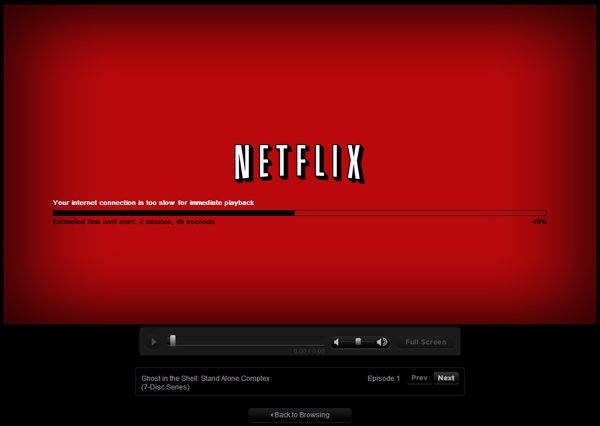
I don't have a Roku box, but apparently users are having issues with Netflix streaming quality, to the point that the video becomes unwatchable. This got me thinking about the fundamental differences between streaming and download services particularly as it relates to the (relatively) new category of IP set-top boxes.
Streaming services like Netflix automatically adjust the quality of the video based on the media player: bandwidth, resolution, etc. The stream is not stored, but played and then discarded. Time to playback is typically short but quality may be limited. If the connection is unreliable or unavailable, a streaming solution effectively no longer works.
Conversely, download services deliver an existing video file but may require the entire file to be downloaded before beginning playback. Since the file is stored locally, quality is consistent and it can easily be replayed. In a system with progressive download, used by Vudu and the new Blockbuster set-top box, playback is started before the video is completely downloaded. However, depending on connection speed and quality, playback may be delayed while waiting for the video download to finish.