

Monday, April 28, 2008
Orb Audio: Do These Small Speakers Measure Up?
Posted by Jason Dunn in "Digital Home Hardware & Accessories" @ 07:00 AM
Getting It All Set Up (...Continued)
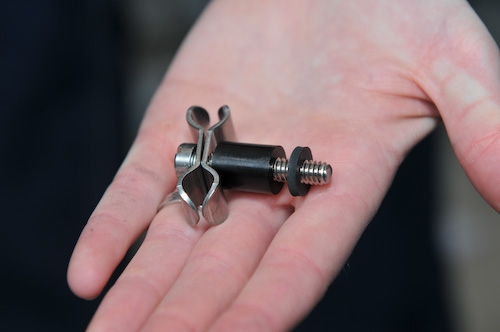
Figure 10: Once the speaker wire is in position, it's time to attach the speakers to the HOSS stands. This bolt-plate widget is what keeps the speakers snug with the HOSS stands.
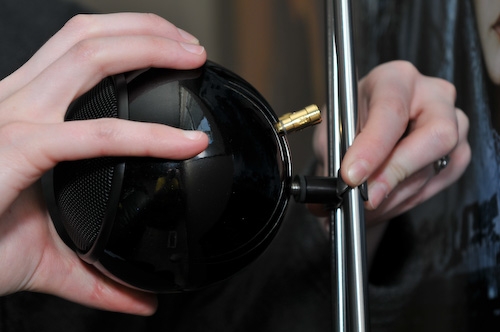
Figure 11: This part is tricky on your own - it's much easier to attach the speakers to the stands with some help.
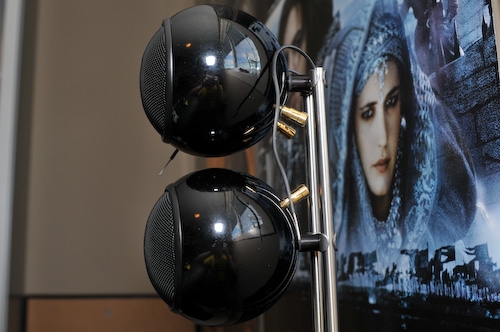
Figure 12: The speakers are attached, now the wires need to be connected.
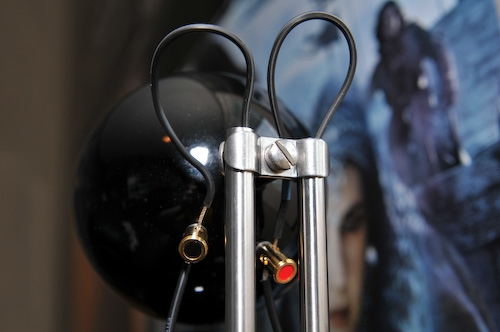
Figure 13: The bottom speaker connects to the top speaker via a small speaker cable, and the speaker cable from the amp connects to the top of the first speaker. In this photo, I haven't pulled the cables from the bottom, so there's some slack up top that's easily corrected.
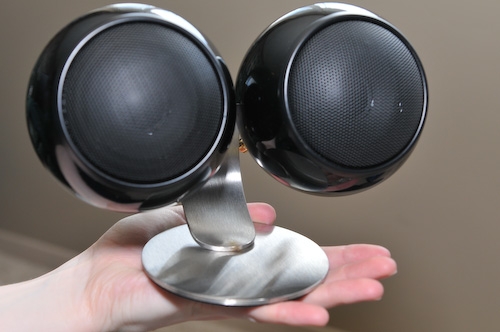
Figure 14: The front of the centre channel speakers - just like the rest of the speakers, only in a horizontal rather than vertical configuration.
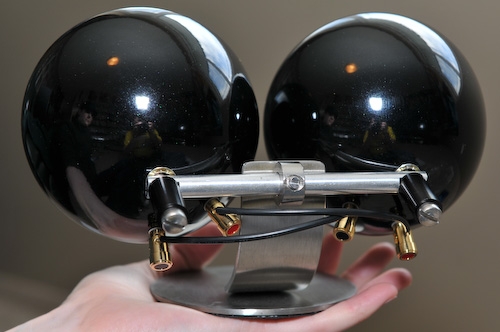
Figure 15: The back of the centre channel speakers are slightly different than the HOSS stands, but the basic principal is the same. The rod that both speakers are attached to can be adjusted easily, allowing you to change the vertical angle at which the speakers are pointed.
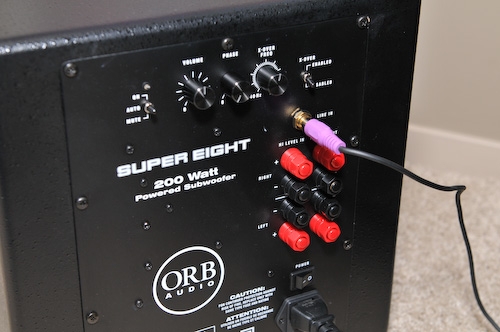
Figure 16: The mighty sub-woofer - this is the Super Eight model. The Uber Ten has the same features, just bigger and louder.
Sub-Woofers: The Super Eight and Uber Ten
Let's talk about that Super Eight sub-woofer for a minute: as you can tell from Figure 3, the Super Eight is downright tiny compared to the giant Harman Kardon sub-woofer I had previously (in fact the cabinet is 12" x 12"). Does size matter? Nope. The Super Eight uses a BASH (Bridged Amplifier Switching Hybrid) digital amplifier, capable of 200 watts continuous and 400 watts peak. I have no clue what the BASH is, but it sure sounds good. The Super Eight is less than half the overall cubic size of the Harman Kardon, and it outperformed the bigger sub-woofer by such a great margin it makes me wish I'd swapped it out years ago. Prior to testing the Super Eight sub-woofer, I always thought that the bigger the speaker, the better the sound - not so with the Orb Audio products. The Super Eight is only $399 USD from Orb, which is quite affordable given for the quality you get - in a big-box retail store you might find some low-end sub-woofers for around the $399 mark, but you won't find any that match the quality of the Super Eight. Features on the Super Eight include a phase switch (0/180), adjustable crossover (40-160hz), temperature protect circuitry, Auto/On/Off power, RCA gold-plated stereo line level inputs, high level gold-plated inputs and outputs, 12dB/Octave hi-pass circuit, and frequency response from 28 to 160 hz frequency response. Is that mostly gibberish to you? The bottom line: the Super Eight sounds superb.
The Super Eight's bigger brother, the Uber Ten, is virtually identical to the Super Eight, it's just bigger and badder. It's encased in a 13.5" by 13.5" cabinet, has a slightly wider frequency response of 24 to 160 hz, and kicks out 300 watts continuous with over 500 watts peak. The back of the unit, and all the features, are the same as the Super Eight. It's a fair chunk of change more expensive though, coming in at $699 USD - although at the time of this writing if you buy the Uber Ten is a $299 upgrade when purchased with any sound system package, so that $699 price would only be if you were buying only the sub-woofer. Do you need the Uber Ten? It really depends on the size of your room - I tested both out in my TV room and while I could tell the difference between the two, either one delivers the bass in a big way. My TV room is about 12 feet wide and 18 feet long - after swapping between the Super Eight and the Uber Ten several times, I settled on the Uber Ten because it seemed a better match for the room. The Super Eight is more than enough for an average sized TV room, but if you've got a bigger room where you're sitting fairly far away from the TV like I do, the Uber Ten may be a better fit.